Showing posts with label St. David's Bench. Show all posts

Thursday, January 24, 2013

Cab Franc Icewine Pairing

Last Sunday marked our second icewine festival and the 1 year anniversary of Newlywined. One of these years, we'll take advantage of some of the other festival offerings, such as the gala, or the Twenty Valley street festival, or the wine and cheese seminars. This year, though, we opted once again for the touring pass. At $40 per passport, I first rolled my eyes that the price had gone up by $10 since last year. However, they've added two additional tickets to each pass, for a total of 8 paired tastings, so the overall value has stayed the same.

As we planned our route, we had two objectives. We were eager to try the much anticipated (at least by me) 2010 vintages, and we were also looking for dessert ideas to pair with cab franc icewines. Our baseline for quality cab franc icewine is now the Peller 2010 (or the Jackson Triggs 2008) so with those in mind we set out once again for Hinterbrook Winery and for Niagara College Teaching Winery.

Hinterbrook

Along with its 2010 cab franc icewine, Hinterbrook offered white chocolate pudding in dark chocolate cups. I've tried dark chocolate with this type of wine many times, and had always been worried that the white chocolate would be drowned out by the wine, or that it would make the wine seem sour by comparison. In this case, it was actually the dark chocolate cup that overpowered the wine. Apart from that, the creaminess of the pudding blending quite nicely with the icewine and the flavours were of surprisingly equal intensity. I am no longer going to be afraid of trying my favourite white chocolate raspberry tart with a bottle of that Peller 2010.


I was especially curious to try Hinterbrook's icewine because its summer offerings last year were full of so many interesting fruit flavours. The nose on the wine was different; yeast was definitely detectable, but Chris and I struggled to describe the fruit.  Cherry?  Strawberry?  Some type of citrus holding it all together?  I've got it: fruit punch!  It actually reminded me of a red fruit punch drink I would get as a kid which came in the same small bottles as apple juice and orange juice to make you think it was real juice too.  The cherry-dominated fruit punch carried through to taste, joined by a hint of spice.  The structure of the wine was not quite acidic enough, leaving the wine tasting a little like syrup.  However, the dark chocolate cup did alleviate that.  Finally, the finish was unremarkable.  Chris and I agreed on a rating of 84.

Niagara College

Let's start with the labels.  NCTW's "Dean's List" brand labels have been redesigned to look like report cards, in keeping with the teaching focus of the winery.  Aside from being cute, though, they also contain all of the wine's tasting notes on them, a very useful feature.  Onto the wine, also a 2010 cab franc icewine, which has a lot of distinguishing features.  Chris described the nose as candied apple - both the candy part and the apple part.  I thought of one of my favourite gelato combinations: strawberry-limone.  The predominant flavour is maraschino cherry, also with some spice (nutmeg?), held together by a wonderfully full caramel undertone which carries through on the medium-long finish.  Chris and I rated this wine 90 and 88, respectively.
NCTW also hit a homerun with its dessert pairing.  It can be difficult to find a dessert wine sweet enough to pair with cheesecake, except when you happen to have a culinary school across the road!  The Niagara College chefs solved this problem by increasing the cheese content and reducing the sugar.  Then they slathered it in salted caramel which further offset the sweetness and brought the wine's caramel undertone to the forefront.  Simply a brilliant pairing!

Saturday, September 29, 2012

Niagara Wine Festival (Colaneri Estate Winery)

This is my third visit to Colaneri Estate Winery, as I wanted to make sure I was giving it a fair chance.  We didn't have a great experience on our first visit, but when I stopped by with some friends a few months later, there had been some improvements.  For example, the construction on the villa was far enough along that they could set up a separate tasting area for festival events.  That visit also gave us the chance to speak with one of the owners, who told us more about her family, the winery,  and its unique series of wine labels, each representing one of her relatives. 

Keep in mind, Colaneri is one of the highest priced wineries in the region, with prices very similar to Tawse, which, I must admit, I find a little nervy, since it implies the wines are of equal quality.  This festival gave me the opportunity for a direct comparison, since Colaneri was serving its 2010 Cabernet Franc, and I am very familiar with the Tawse equivalent.  A unique feature of this wine is that it is produced using the apassimento method, meaning that, in this case, 30% of the grapes have been dried before pressing, resulting in a higher concentration of sugar and flavours.  I have heard various opinions as to whether or not this is a luxury, since the time and labour intensive process results in lower yields, all of which raise the price of the wine.  Others insist that good grapes in the correct climate shouldn't need artificially aged, explaining why the process is popular in northern, as opposed to southern Italy.  Anyway, if you have any knowledge of the topic, I'd appreciate your comments. 


This is one of the nicest smelling wines I've ever tried.  The easy to find nose begins with bell and roasted peppers, and possibly dried tomatoes.  As the wine aerates, cedar, eucalyptus and cocoa are all detectable.  Unfortunately, the taste does not live up to the beautiful complexity of the smell.  It is quite dry, and even a little chalky, possibly suggesting its youth.  (Keep in mind this was the release date for this wine.)  Chris noted he could taste the alcohol, but only barely.  The mouthfeel is also somewhat thin for a cab, even a franc.  It did pair nicely with the accompanying lasagna though, and earned an rating of 85 from us both, making it the best wine of the day, but falling short of the expectations set by both Tawse and Peller for this varietal.

Tuesday, September 25, 2012

Niagara Wine Festival (Coyote's Run Estate Winery)


Our next stop on the Discovery Pass tour was Coyote's Run Estate Winery, which came highly recommended from our friend Kelly.  The winery is a short drive north from the base of the escarpment, which puts it a few minutes out of the way from the easiest wine route to follow.  The landscape is very much a farm, but a neat and tidy one, with a pre-fabricated shed providing retail space on the cottage looking side and production, out of sight, on the other barn like side.


Inside, the retail space is quite tight, but manages to sqeeze in a small tasting bar, adequate shelving to display the current offerings, and a table set up for the festival.  The smell of yeast from the facility next door fills the air, which, at least for a winery, is quite charming.  The property compensates for the lack of space indoors by providing two outdoor sitting areas, both with nice views of the vineyards and surrounding countryside.


We tried the 2011 Pinot Gris / Pinot Blanc paired with slow roasted pork with apple jelly, tomato chutney and rosemary.  As you would expect, it is a mild wine.  The nose is very hard to find, especially in a building that smells like yeast anyway, but eventually I could detect some minerality and a hint of melon.  The flavour is very mild, clean and crisp.  It has a slightly longer finish and better structure than the white we'd tasted earlier in the day.  It accented the food nicely, but was slightly overpowered by it.  (It would have been perfect if it was the Niagara Roasted Pork festival!)  We didn't dislike the wine, and rated it an 83, but realistically for its $15.95 price tag, an Ontario sauvignon blanc would fit all the same purposes.

Tuesday, June 12, 2012

More about Maleta

This is a follow up to Wine & Herb day 2 (Riesling)

Maleta was a little hard to find, and even a little hard to spot from the road, and its exterior doesn't look like much. When we entered the property's small cottage-turned-retail-space, though, we were greeted with a very genuine "Welcome to our winery" which set the tone for the rest of the visit. As I've mentioned before, sometimes small wineries don't take full advantage of passport events, being more concerned with cost minimization than capitalizing on the opportunities walking through their doors. Maleta certainly avoided this mistake; the hostess (who, from what she said, is the spouse of either the winemaker or the owner,) explained to us that the food pairing would take a few minutes to prepare, so offered us a glass of the 2009 Rose Reserve made from a blend of gamay and merlot. I didn't take many notes on this one, as it wasn't the 'main event,' - and I was thirsty! I do remember thinking cranberry, and that unlike many roses, this one isn't candy, or 'boat wine' as I now call it. However, the winery's website has very descriptive tasting notes (copied below) that really ring true of my two tasting experiences.

Wine2009 Rosé Reserve2008 RIESLING (MEDIUM-DRY)
Price$15.95 (750 mL)$16.95 (750 mL)
% Alcohol12.0% alc.11.5 % alc
Sight, Smell & TasteThis wine shows a very pretty salmon pink. A delicate nose of red berries with just a hint of wet leaves – it’s really amazingly complex for a rosé. Light and fruity in the mouth, flavours exhibit strawberry and cherry fruit with a hint of red licorice. It finishes dry with lingering cranberry notes. A very refreshing wine with enough structure for light protein dishes such as roast chicken or veal scaloppine and makes a special companion for onion tart. Pale gold with subtle green highlights, the colour is still showing youth. The nose is delicate with green apple, lime and just enough of Riesling’s petrolly pungency to make it more interesting. The mouthfeel is gentle and elegant with a round smoothness and flavours of green apple, lemon and lime.The finish delivers some zippy acidity and plenty of length. This is an all round sipper for easy drinking on its own or served with sole almondine, seafood risotto or creamy pasta.
Aging PotentialPerfect for your valentine, or enjoy it with Easter ham and summer picnics. Drink by the end of 2012.There is no need to wait, drink now, although the wine will cellar well into 2013.

The hostess' passion for her products really set this visit apart from the others. She spoke enthusiastically about their new branding efforts to distinguish their three wine categories; the Grape Brain label is intended to be approachable for easy drinking, the View label lends itself to fine dining and the Meritage wears its own label to set it apart as the winery's signature product. She also pointed out the winery's tendency to age its bottles before releasing them, so when you buy them they're ready to fully enjoy. Finally, she shared with us the story of how, upon learning that her assigned herb was pineapple-sage, she had to Google it to find out what it was, then find recipes that included it, then learn how to make marmalade, then select a wine to match it all. She made it sound like a labour of love. The result was excellent, and highlighted both the riesling and the pineapple-sage while other wineries hid their assigned spice in a dish that best showed off their wine. All in all, Maleta's efforts paid off as I will return, taste, and buy several of their wines in the future, once we've made more room in our bar.

Sunday, June 3, 2012

Two More Sauvignon Blancs

Strewn Winery
Since Strewn wine labels are very sleek and sophisticated, I expected an ultra modern winery with lots of steel, glass and dark wood but was greeted instead by a salmon-coloured, Asian looking building with well manicured gardens and lawn.  Inside, a greeter directed us to one of two tasting rooms, which was set up to accommodate large groups of Wine & Herb tourists simultaneously. 
Strewn's assigned herb was mint, which it used in a vinaigrette dressing for a mixed green salad with asparagus and feta cheese.  Given the winery's on site cooking school and restaurant, it is not surprising that the salad was delicious, and since they gave out the recipe, we'll be making it again in the future.  Unfortunately, Strewn's 2008 Sauvignon Blanc did not stand up to the salad, despite its bigger, mildewy nose and golden colour.  The taste was crisp, but quite thin, and the mild taste of nectarine / tropical fruit got lost under the intense mint flavour of the vinaigrette.  I am interested in returning to this winery at some point, though, to try both its restaurant and its separate "terroir" tasting room which only offers tasting flights of its premium wines.

Niagara College Teaching Winery

This was a much better experience than my first visit to NC Teaching Winery.  We were able to sit outside on the patio overlooking the vineyards that blend into the side of the escarpment to enjoy the best pairing of the day: 2009 Sauvignon Blanc and "five spice Ontario pork loin with mango chili salsa".  Compared to the other bottle we purchased that day from Stonechurch, this one, for $15.95,  has a bigger nose, mostly of mildew, and a bigger body.  It's slightly sour, less dry and has a very consistent flavour of sour apple with a light minerality throughout.  It's acidity tickles the sides of the tongue, almost as if it were carbonated.  What impressed us about the pairing wasn't just how the wine and the spices played off each other, but also that the wine brought out the flavours in the pork itself.  I should also note that wine accessories appear to be less expensive at NC than at other boutiques; we bought an epicvac wine saver set for $17 that we'd seen at other wineries for $25.

Tuesday, May 22, 2012

Wine & Herb day 2 (Riesling)

Since the Wine & Herb passport includes Fridays, and because Carrie and I always get the Friday before the long weekend off work, we headed out for the afternoon to the three wineries exhibiting their rieslings: Joseph's Estates Winery, Ravine Vineyard , and Maleta Estate Winery.  We also stopped by The Ice House, because it was on our route and its assigned spice was arugula, which I absolutely love.  Since I've blogged about Joseph's and Ravine before, I'll focus here just on the riesling pairings, and will give a more thorough review of our visits to Maleta and the Ice House at a later date.

The Contender - Ravine Vineyard


Coming third in a 3 person race perhaps isn't something to brag about, so I should note that all 3 rieslings we tried today were very enjoyable.  I should also note that Carrie disagrees with me about the relative order of 3rd and 2nd place.  Our main point of contention is that Carrie likes sweet wine, and Ravine Vineyard's 2010 Estate Riesling rates a 3 on the sugar scale.  The server explained that this is an organic wine, and that its sweetness is the result of a particular fungus which would be eliminated were the vines to be chemically treated.  After a weak grassy nose, I was a little taken back by both the sweetness and body of this wine, for an Ontario riesling, and I invented a new category: boat wine.  (Boat wine is wine my parents would drink on a Sunday afternoon at their boat, requiring no food accompaniment and often leading to a headache despite not tasting in any way like alcohol.  The exemplar for all boat wine is the Beringer White Zinfandel from California.)  The wine's flavour is fruity, and lemon seems to stick in my mind, but this is probably because it was paired with a lemon tart infused with citrus thyme.  The intense lemon flavour from the dessert seemed to suck up all of the wine's sweetness, leaving behind a flatter, more tart taste, especially on the sides of the tongue.

The Runner Up: Joseph's Estate


Joseph's offered a very similar pair, matching its 2007 Riesling to a lemon square seasoned with thyme.  In this dessert, the lemon was slightly more subtle, the crust more buttery and flaky and the thyme more prominent; Joseph's definitely did a better job with its assigned herb pairing.  Although Joseph's does bottle a sweet riesling, it offered instead its drier version, a 0.5 on the sugar scale.  It has a weak nose with a hint of grass, and a clean flavour featuring yellow grapefruit.  There was initially a pronounced tartness near the front of the tongue, but the addition of the lemon square dulled it, evening out its taste and consistency.  The resulting flavour was very much like that of Ravine's combination.  If that's the result I was looking for, though, I would be far more likely to buy the Joseph's bottle at $9.95 than the Ravine one at $28.  (It is entirely possible that I just don't know how to appreciate extra-sweet rieslings though, or that organically produced wines always sell at a premium.)

The Winner: Maleta Estate

Maleta's 2010 Riesling is all around more subtle, complex and sophisticated than the other two visits of the day.  I noted an aroma of tomato vine or stem but didn't take any notes about the delicate taste as I was too distracted by the fantastic and well thought-out pairing of baguette, brie and marmalade made with the assigned spice, pineapple sage.  (I'd never heard of pineapple sage; it looks like regular sage but smells like pineapple.)  The wine was very well balanced, falling in between Joseph's and Ravines on sweetness and smoothness.  Like Joseph's, though, it must be purchased at the winery (for $16.95) as it is not available at the LCBO.

Monday, April 2, 2012

2 Merlots (end of Wine & Chocolate)

So it's early April and I'm finally finishing my coverage of February's Days of Wine and Chocolate.  It seems my pesky job and MA program are interfering with my drinking and blogging.  Our final two wineries of the festival both featured their merlots: Joseph's Estate Wines and Colaneri Estate Winery.  Chris and I actually agreed on everything about these two stops!


Wine
Staff
Atmosphere
Chocolate
Passport Value
Chris' Choice
Joseph's
Joseph's
Joseph's
Colaneri
even
Jan's Choice
Joseph's
Joseph's
Joseph's
Colaneri
even


THE WINES AND THE CHOCOLATES


Joseph's offered its 2007 merlot reserve with dark chocolate mint.  Tasting the two flavours separately, we didn't think they would pair well, but they actually complimented each other quite nicely.  We will certainly explore other combinations of merlot and mint in the future; there might be lamb involved too.  As for the taste, the initial fruitiness was followed by a hint of licorice.  Perhaps the most noticeable feature of this wine, though, was its quick, dry, tingly finish, something Chris strongly prefers in any wine.  Joseph's doesn't distribute its wines in the LCBO.  The 2007 Merlot Reserve is available at the winery for $13.95 per bottle.


Colaneri combined its 2009 'pensieri' merlot with a very rich, moist tiramisu.  The wine itself had a big peppery nose but its initial taste was unpleasantly sour.  Once the cream in the tiramisu broke through the rather high alcohol content (13.9% vs Joseph's 12%), the taste changed dramatically, complementing the dessert's coffee flavour.  The overall flavour of the wine was of Christmas pudding: currant, cherry and spice.  It also had a much longer finish than the one we'd tasted earlier.  Although I can't say I disliked this wine, I certainly wouldn't pay the $30 / bottle that Colaneri charges.


THE STAFF AND THE ATMOSPHERE

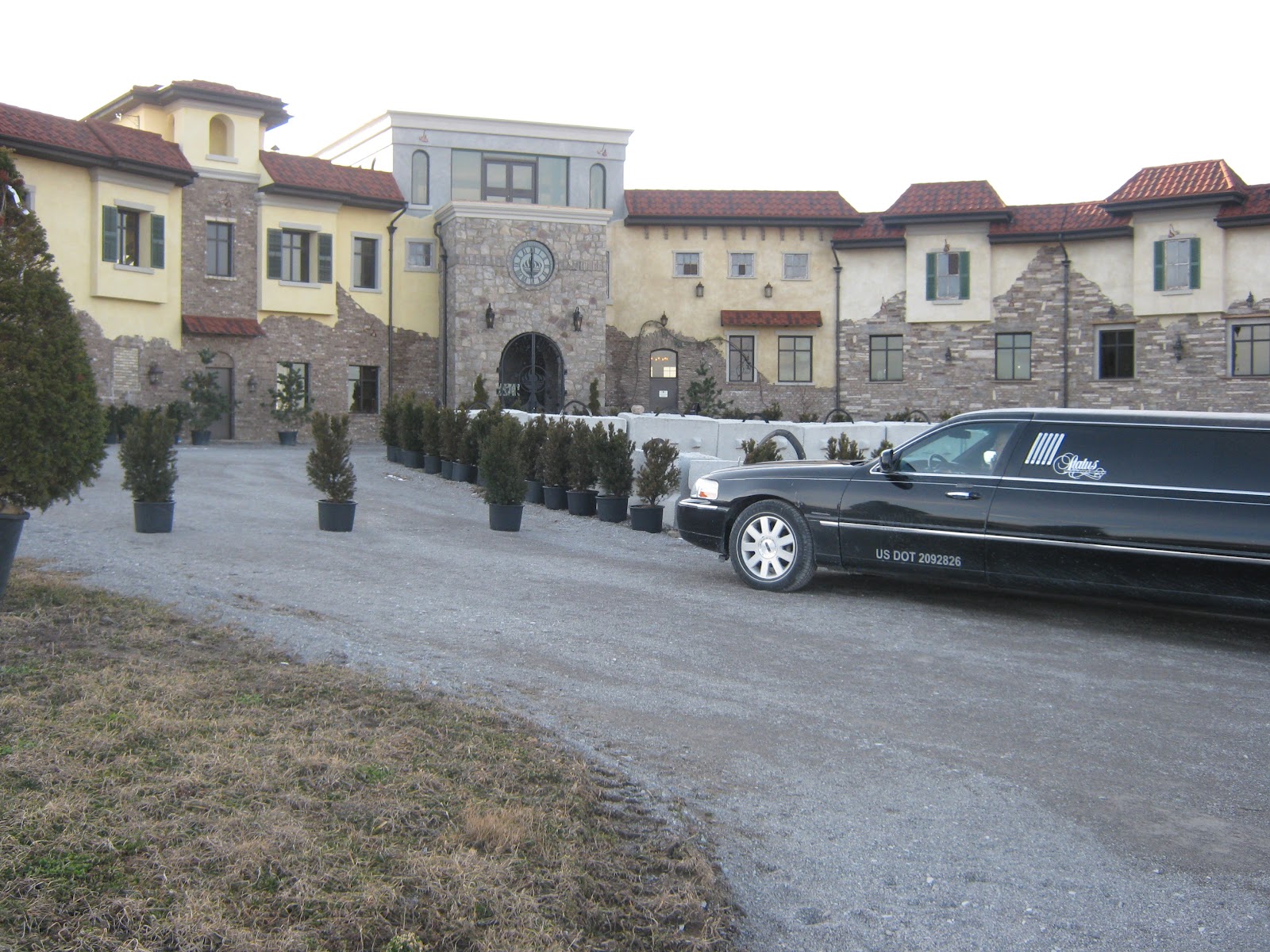
It's difficult to compare the atmospheres of the two wineries because they're so very different.  Joseph's has the look and feel of a country general store: quaint and friendly with lots of natural sunlight and pine.  In addition to wine, it sells lots of accessories and interior decor but the store is very well organized to avoid feeling junky.  Colaneri, on the other hand, mimics an Italian villa.  Unfortunately, the faux finishes of stucco and brick on the exterior, together with the enormous size of the building, cross the line from glamorous to gaudy.  One nice feature of the interior is that the second story mezzanine overlooks the steel fermenting casks.  However, the mezzanine, which houses the two tasting bars, shares the overdone feeling of the exterior with an excessive amount of dark hardwood and granite counter-top.  A quick scan of its wine shelves revealed consistently high prices, similar to those at Tawse.  I suppose that's a positioning tactic, implying the wines are of similar quality, but I'm not convinced yet that they are.

Friday, March 16, 2012

Niagara College Teaching Winery (Day 2 cont'd)

NC Teaching Winery served its 2008 Dean's List Chardonnay with a milk chocolate topped with cashew brittle.  Carrie picked this stop because she prefers whites over reds, and this was one of the few whites offered during Days of Wine and Chocolate.  (I think she'll like May's Wine & Herb tour better.)  I'm not going to comment on the wine because I don't really know Chardonnay well, but this turned out to be one of the better chocolates of the day!


As for the winery, there is not enough parking outside the store itself.  This wouldn't be a problem in nicer weather but I don't want to walk across the street from the College in February.  Also, the sheltered entrance apparently doubles as a smoker's cove and the smell on the way in is quite abrasive.  Inside, though, the circular tasting bar and panoramic windows to the vineyards gave both a welcoming and a professional impression.


The highlight of this visit, though, wasn't actually the wine, but a new product called Ice Syrup.  The entrepreneur who developed this idea was there to demo his product, which is essentially unfermented icewine to be used as a syrup for both sweet and savory dishes.  We tasted both varieties, the vidal and the cab franc.  I liked them both very much, but felt the vidal offered more diversity and could be served as part of an appetizer, entree or dessert.  I'm looking forward to wowing some unsuspecting dinner guests with this one.


Saturday, February 25, 2012

Chateau des Charmes (Day 1 of Wine and Chocolate)

Chateau des Charmes was our final stop on day 1, and ended our search for a cab franc to rival our current favourite. If you haven't already, read more about how the day started. Otherwise, here's how it ended ...

Keep in mind that this was the 5th wine we'd tasted in about 2 hours, which might explain the ensuing confusion. The cab franc we tasted instantly identified itself as a contender to Tawse. We thoroughly enjoyed the taste, enthusiastically chatting about it much more than usual, but all I wrote down was cocoa, prune, bell pepper, and more tannin (compared to Ravine Vineyard). In hindsight, I'm not sure how much of that was describing the taste versus the smell. We promptly decided to buy 2 bottles to consume alongside the Tawse, once in the near future, then once again after a few years, and we were shocked when we got to the boutique to discover that the price on this wine is only $13.95.

Here's the problem; I'm not actually sure which vintage we tasted. When I started writing this, I checked my touring pass to make sure I would get all the names correct.  It lists the winery's 2008 Estate Bottled Cabernet Franc.  Panicked, I ran upstairs to the wine fridge, confirming that we'd actually bought the 2009 instead, but I distinctly remember verifying with the boutique staff that this was what we had tasted.  Then I checked the winery's website, and found that only the 2009 is available for purchase.  So, either Chateau des Charmes was showcasing a wine that it no longer actually sells, or there was a typo in the touring pass.  Either way, the winery has a good reputation for cab franc; I found an exceptional review of the 2007 at OntarioWineReview.com. 


This is definitely a winery worth further investigation, both for its high quality and for its low prices.  Chris also wants me to clarify that my lower ranking for its atmosphere only reflects on how much we liked Pondview and Ravine Vineyard, and not on any defect of Chateau des Charmes.  The estate mansion is both spacious and opulent with several rooms available to host simultaneous functions.  The rooms also function as gallery spaces with local artwork on display and available for purchase.  You might perceive a certain country-club stuffiness, but the staff work to avoid this; there is a greeter at the front door to help navigate the various wings and staircases and our server, a delightfully friendly French-Canadian woman, kept things refreshingly down to earth.

Thursday, February 23, 2012

Ravine Vineyard (Day 1 of Wine and Chocolate)

Stop 3 of the day was Ravine Vineyard Estate Winery. Now, apparently one of my three blog followers was disapointed that I didn't give a more detailed explanation of my ranking of Pondview the way I did for Inniskillin, so I'll return to that format as I continue to share our search for cabernet francs comparabe to (but cheaper than) our beloved 2009 Tawse Grower's Blend.

THE WINE - The 2010 Sand and Gravel cab franc was one of many nice surprises of this visit, but Chris and I disagreed about it on many fronts. We both found it fuller bodied than what we'd just had at Inniskillin. Oddly enough though, Chris noticed a hint of tobacco when all I tasted was big purple grapes and juicy black plums. He wanted a cleaner finish but I felt it was just right, as reds with less acidity are supposed to stay longer on the tongue. He said it tasted young, but I pointed out that it is younger than all the others we've tried. We agreed to try it again after a  year or so.

THE CHOCOLATE - Although chocolate covered pretzels just might be the perfect snack, this sweet and salty flavour combination neither added to, nor took away from the flavour of the wine. This might be because the wine's flavours were very accessible on their own and didn't need any help. 

THE VALUE - On one hand, the wine serving was more generous than many others have been. On the other hand, a single chocolate covered pretzel looks lonely.

THE ATMOSPHERE - Overall, it had the same feel as the movie Bottle Shock: elegant but eclectic country with a flair of modern hippy. To park, you drive through the vineyards, past an antique rusted-out truck (on which they apparently barbecue in the summer,) before arriving at two buildings each steeped in history. One, a former packing shed originally built in the 1920s, now houses the bistro and the occasional live music event. The other, a residence originally built around 1802 is home to the wine boutique, the tasting bar, and, in the summer, a gourmet fresh bakery of sorts.
 
THE STAFF - Aside from being friendly, the staff seemed to really like wine, really like people and really like working at the winery. They were eager to tell us about the wines and the company history, without making us feel like we were being sold to.